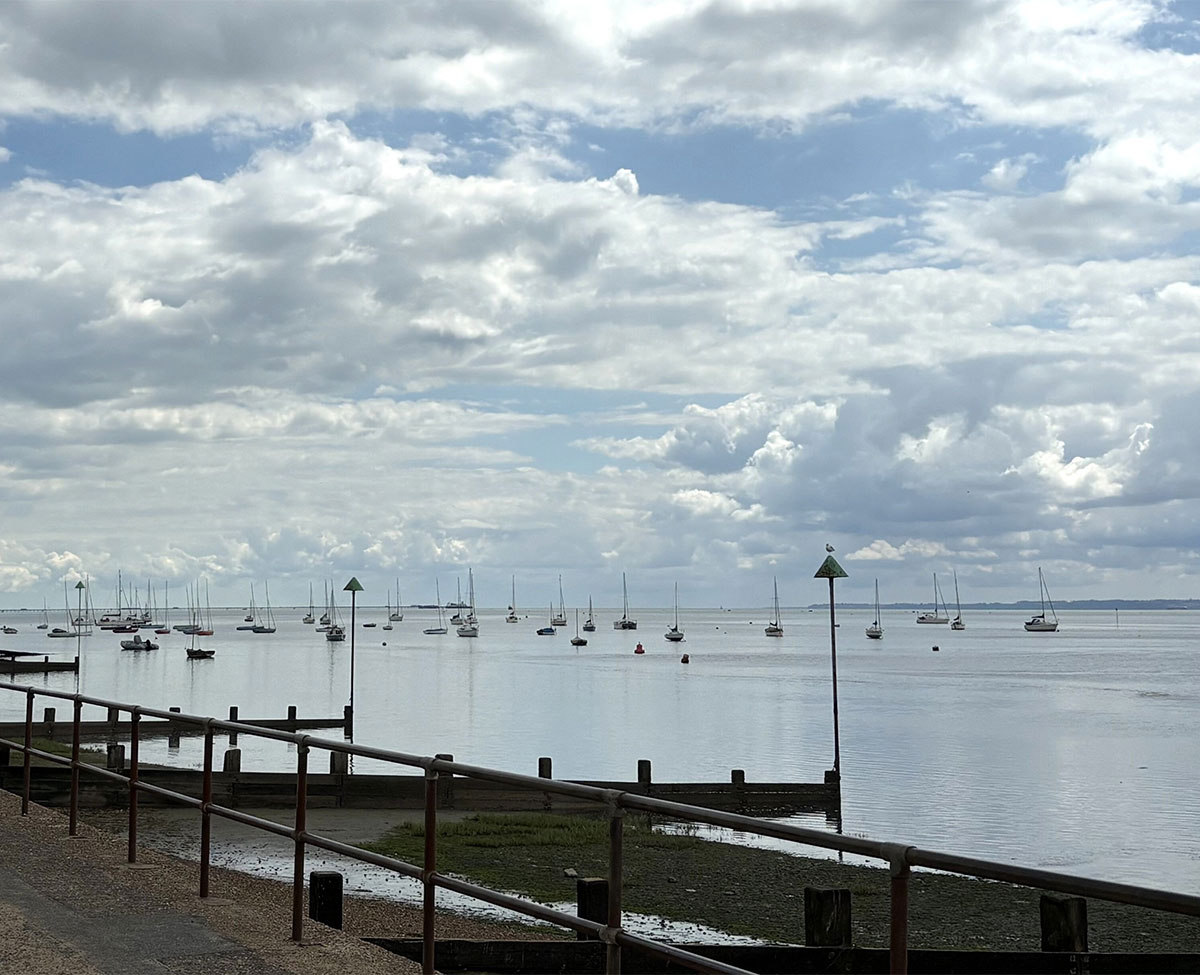
Leigh-on-Sea, once a thriving port, is situated on the north bank of the River Thames. Silt filled the harbor in the 18th century, diminishing shipbuilding and fishing. However, regular harvesting of cockles (edible molluscs) continues. Locally owned sailboats ride at high tide. For detail turn to page 10.
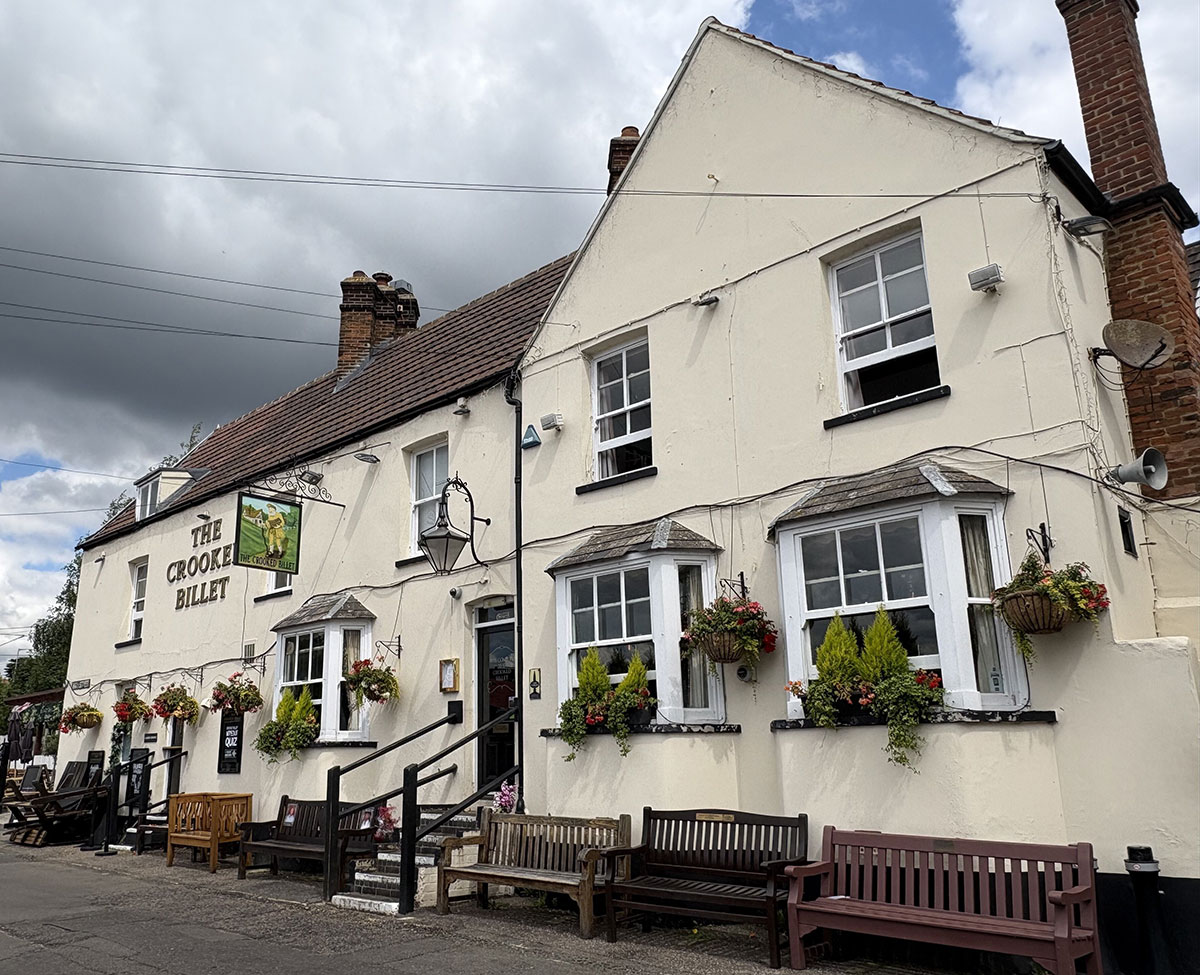
The Haddock family home, purchased in 1619 and demolished in the late 19th century, once stood on the northeastern corner of Billet Lane and the High Street, diagonally opposite the Crooked Billet. The popular pub, built in the 16th century, is still in operation. For detail turn to page 81.
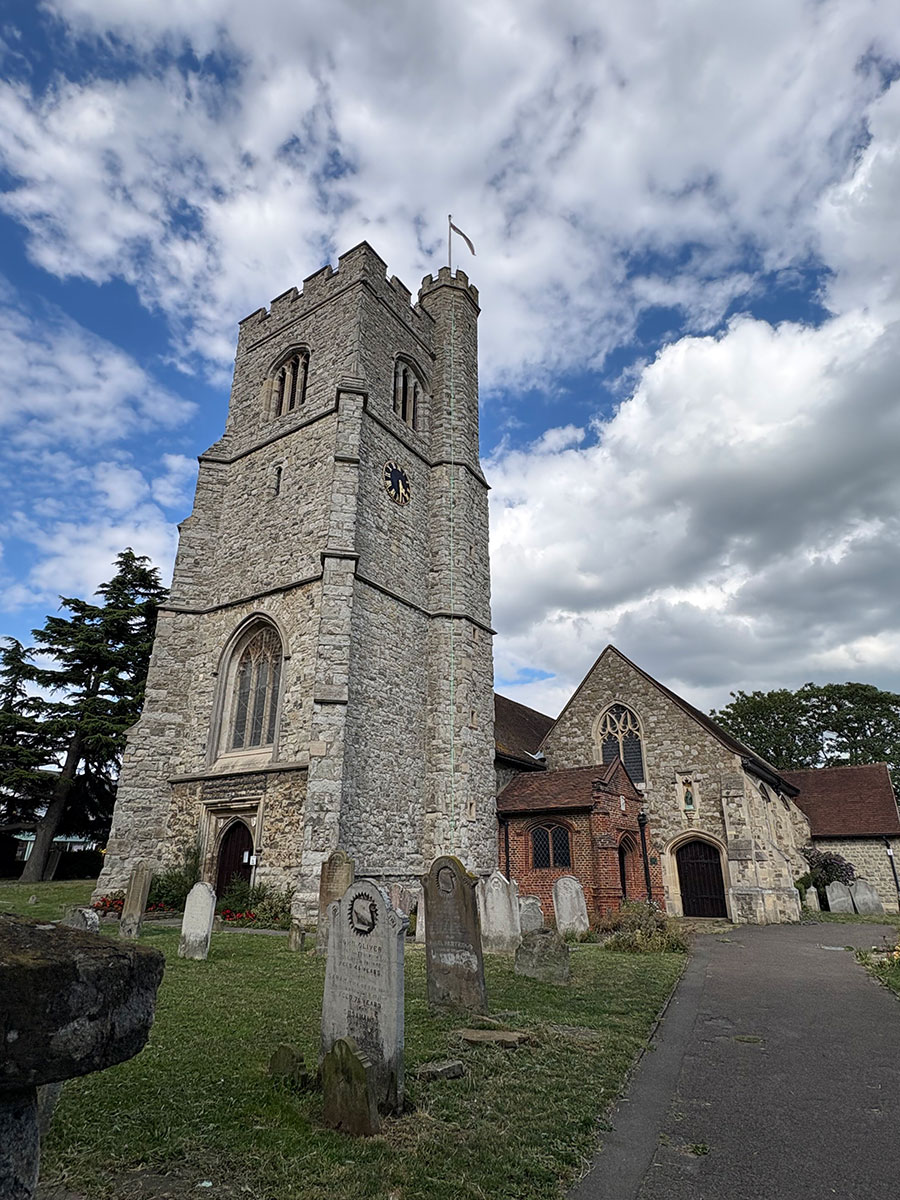
The Haddocks attended St. Clement’s Church atop Leigh Hill in Leigh-on-Sea. At least 18 members of the family are buried there. The church tower was a seamark that helped mariners navigate the River Thames. For detail turn to pages 11–12.
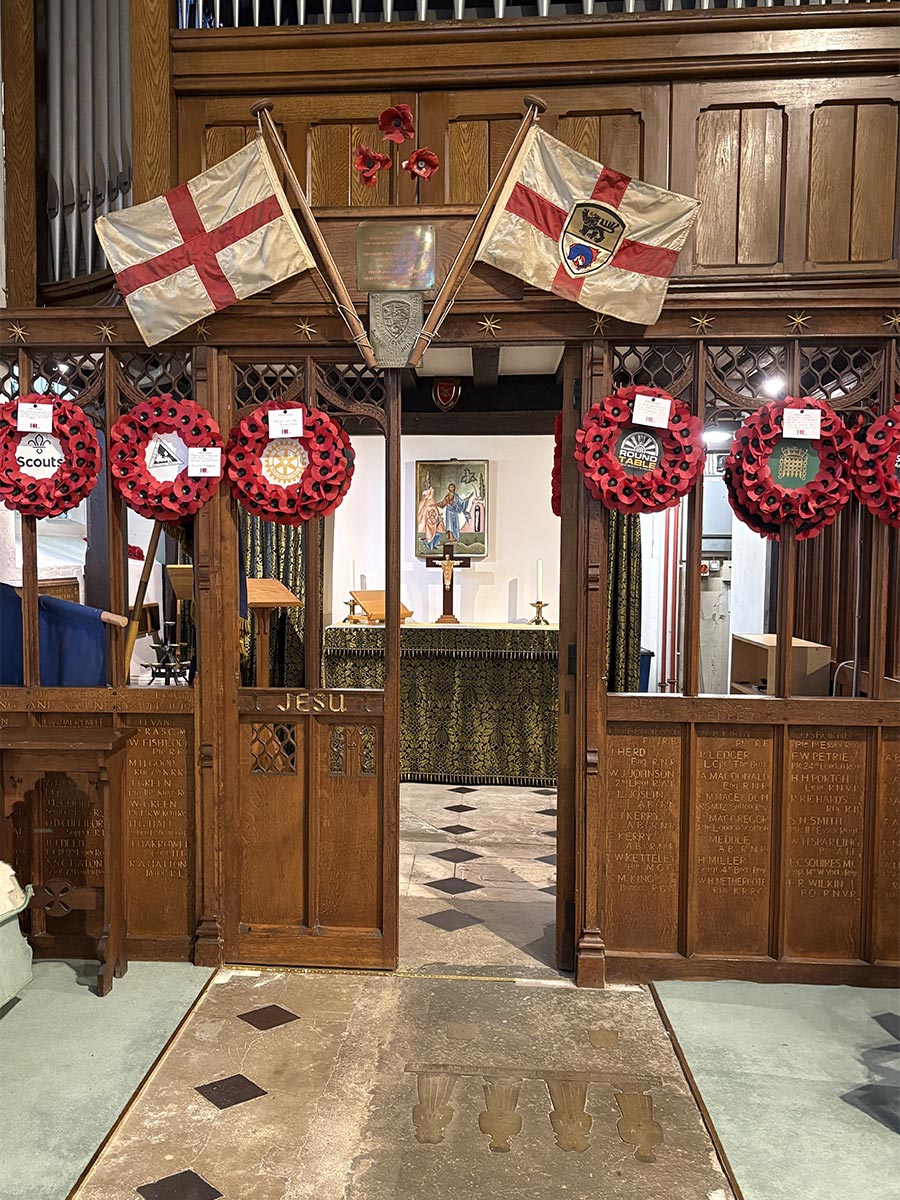
Some of the earliest known Haddock seafarers are buried in a vault facing the Resurrection Chapel at St. Clement’s Church. They include Richard Haddok (the spelling at the time, d.1453), his two wives, one of his sons, and the son’s wife. The red poppies commemorate England’s war dead. For detail turn to pages 17–18.
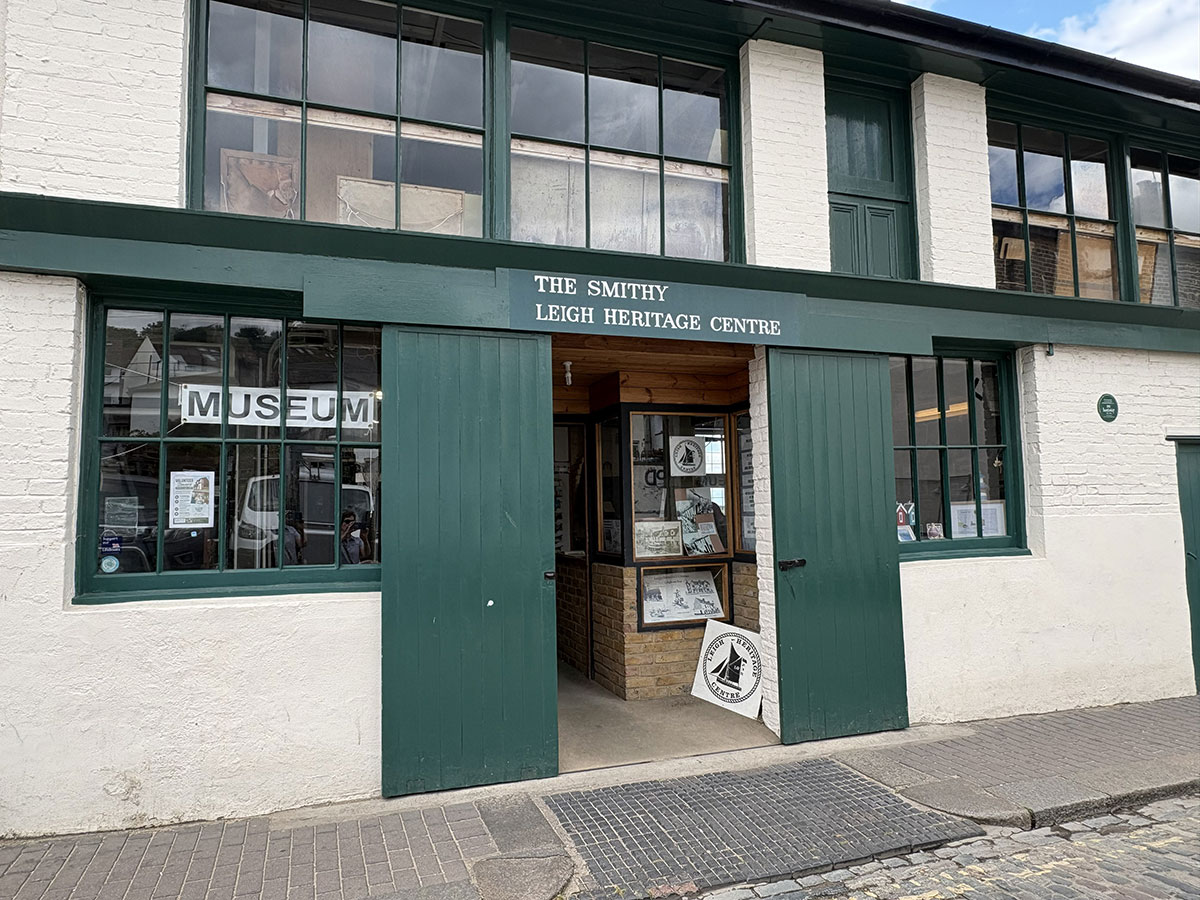
Leigh Heritage Centre includes a small museum of local history. It is housed in a former blacksmith shop in the Old Town of Leigh-on-Sea. The Centre is attached to Plumbs Cottage, a rebuilt fisherman’s home of the mid-19th century. For detail turn to page 9 and see https://leighsociety.com/index.htm.
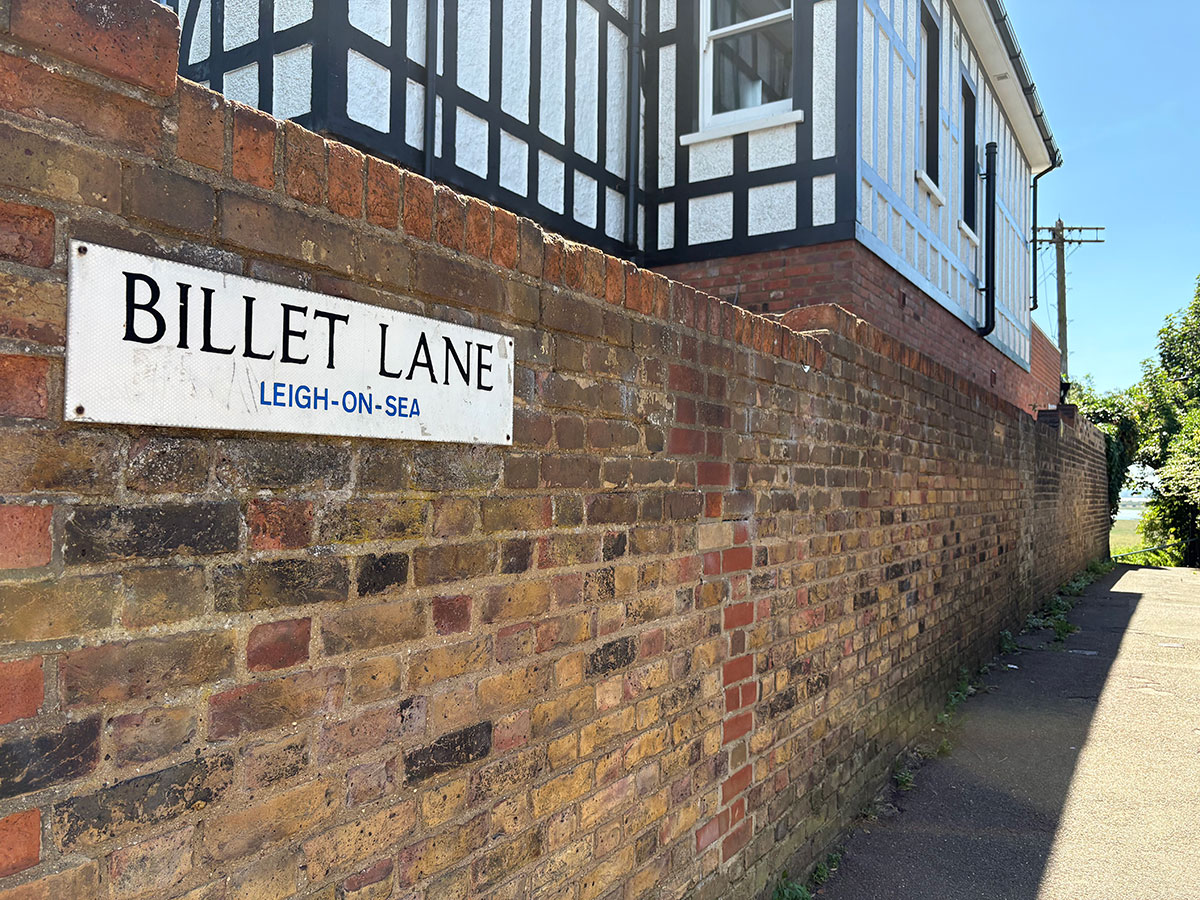
Billet Lane, a steep walking path, connects Leigh Hill to the old town fronting the harbor. The word “billet” is a 15th-century term referring to a short, thick piece of wood. Compare this image to a black-and-white photo taken about 100 years ago. For detail turn to page 24.